Dubai and the UAE have attracted enormous amounts of international capital over the past decade, becoming a default tax and lifestyle base for entrepreneurs, investors and internationally mobile families.
Recent events in the Middle East have made some people reconsider concentrating both their Plan A and Plan B in the same region. That does not necessarily mean leaving Dubai. It means looking for additional options somewhere completely different.
One country increasingly coming back into that conversation is Mauritius.
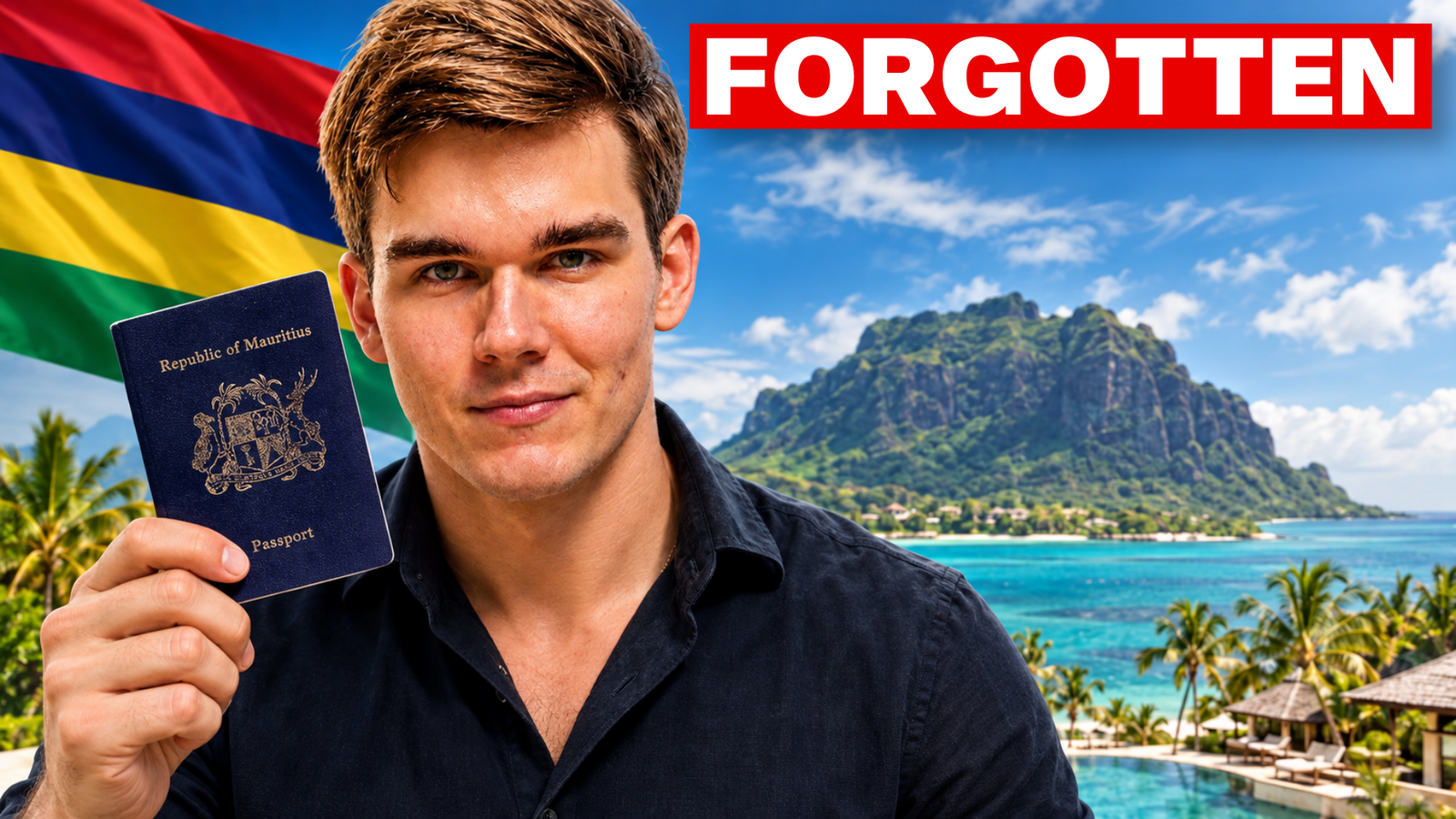
This Indian Ocean island combines a tax-friendly system with developed financial infrastructure, a very different lifestyle from the Gulf and a realistic path towards a strong second passport. For someone looking to diversify geographically without giving up quality of life, Mauritius presents an unusual combination.
Mauritius Is Not the Africa Many People Expect
Mauritius is an African country, but its economy and infrastructure distinguish it from much of the continent.
It is one of the wealthiest countries in Africa, with an economy built around tourism, financial services and, increasingly, technology.
The island offers modern infrastructure, luxury resorts, shopping centres, international schools, private healthcare, a modern airport and a developed financial district.
Outside the urban areas, the appeal is very different. Mauritius has white beaches, mountains, tropical forests and high-end real estate overlooking the ocean and surrounding landscape.
It is also highly multicultural, with Indian, African, Chinese and European influences. English is an official language, while French is widely spoken.
For someone relocating from Europe or coming from a base such as Dubai, that can make the transition considerably easier.
A Plan B needs to be somewhere you could actually live
There are many jurisdictions where a foreigner can obtain residence, establish a company or technically become tax resident. Mauritius is more interesting because it can also function as a genuine lifestyle base, with developed infrastructure, financial services, healthcare, schools and a very different environment from the Gulf.
How Taxation Works in Mauritius
Mauritius is not a pure zero-tax jurisdiction like the UAE. It has an income tax system for locally sourced income.
However, the system also has a remittance-based element.
Under the framework described in the source, a Mauritius tax resident is generally taxed on income arising in Mauritius as well as foreign income that is actually remitted into Mauritius.
This can create a very different position for someone whose businesses, investments and banking remain outside the country.
For example, an entrepreneur could have a business overseas, receive foreign dividends or generate other foreign income. According to the source, that foreign income is not taxed in Mauritius as long as it is not brought into Mauritius and spent locally.
This makes it possible to use Mauritius as a tax home while maintaining companies, bank accounts and business operations overseas.
Corporate Tax in Mauritius
For local companies, the standard corporate tax rate described in the source is 15%.
Mauritius also provides exemptions for certain categories of foreign income. Qualifying foreign dividends and certain interest income can receive an 80% exemption, potentially reducing the effective tax rate on that income to approximately 3%, provided the relevant conditions are satisfied.
Crypto in Mauritius
Mauritius is also described as a crypto-friendly jurisdiction.
Crypto is integrated into the island’s financial environment rather than automatically being treated as a major compliance red flag, and the source states that cryptocurrency gains can be tax-free.
For entrepreneurs and investors whose wealth is substantially connected to digital assets, that can make Mauritius particularly relevant when compared with jurisdictions that impose more restrictive tax or banking treatment.
The Mauritian Passport
The Mauritian passport is described in the source as the second strongest passport in Africa, behind Seychelles.
Its value is not simply the total number of destinations available. It provides an unusual mix of international travel access that can complement other citizenships.
The travel footprint highlighted in the source includes:
- Japan
- The Schengen Area
- Russia
- China
- Iran
- Taiwan
- New Zealand
- Extensive access across Africa, particularly southern Africa
The obvious gaps include Australia, the United States and Canada. Much of South America and the wider Americas also remains less accessible.
For someone building a portfolio of citizenships, however, those gaps do not necessarily undermine the strategy. A Mauritian passport could be combined with a traditional Caribbean citizenship by investment passport offering stronger access in other regions.
Mauritius also occupies a different geopolitical position from conventional CBI jurisdictions. It is not known internationally for selling passports because it does not have a citizenship by investment program.
The Mauritian passport becomes particularly interesting as a complementary citizenship. Its travel footprint across Europe, Africa and parts of Asia can add something materially different to a passport portfolio rather than simply duplicating the access an investor already has.
The $375,000 Real Estate Route
Mauritius offers a fast-track naturalization strategy connected to investment and residence.
Under the first route described in the source, an individual can invest $375,000 into qualifying real estate, such as a villa within an approved residential development.
This provides permanent residency immediately and can lead to citizenship after seven years.
Maintaining the residence permit requires visiting Mauritius at least once per year.
For investors whose wealth is primarily held in digital assets, the source also states that qualifying property can be purchased directly using Bitcoin or USDT.
Seven years is not an instant citizenship route. But unlike a traditional CBI contribution, the capital is being deployed into real estate rather than simply donated to a government.
At the same time, the investor receives a permanent residence position in a country that can function as an actual lifestyle and tax base.
The $500,000 Route to Citizenship in Two Years
The second investment tier described in the source is significantly faster.
With an investment of $500,000, it is potentially possible to obtain Mauritian citizenship in just two years.
The difference is substance.
This is not presented as a route where an investor makes the investment, visits occasionally and simply waits for the passport. The source states that applicants seeking fast-track naturalization are expected to demonstrate a much stronger connection to Mauritius.
In practice, that means genuinely living in the country and generally spending at least six months per year there.
The two-year route requires genuine substance
The $500,000 route is not described as passive citizenship by investment. Applicants seeking naturalization within two years are expected to build substantial local ties and generally spend at least six months per year in Mauritius rather than maintaining only minimal physical presence.
For the right applicant, however, two years is an exceptionally short naturalization timeline.
The tax environment also changes the economics compared with pursuing fast-track citizenship through residence in a high-tax country. An investor can establish genuine residence in Mauritius without necessarily exposing their entire worldwide income to the type of taxation they could face elsewhere.
Other Mauritius Residency Options
Real estate is not the only route onto the island.
The source identifies a business route requiring an investment of $50,000 into a Mauritian business, which can also provide a basis for residence.
For individuals aged over 50, there is also a retirement residence option that does not require the same real estate investment.
- $375,000 qualifying real estate investment with permanent residence
- $500,000 investment route connected to potential two-year naturalization
- $50,000 investment into a Mauritian business for a business-based residence route
- Retirement residence for applicants over 50 without requiring the same real estate investment
Why Mauritius’ Neutrality Matters
For internationally mobile investors, the value of a passport is not limited to visa-free travel.
Mauritius occupies a relatively neutral geopolitical position.
The travel access itself illustrates that position. A Mauritian passport can provide access to Europe while also opening countries such as Russia and Iran.
Mauritius is not a major participant in global geopolitical conflicts and carries relatively little political baggage internationally. To most people, it is simply a small island nation in the Indian Ocean.
That can be valuable for someone looking at citizenship as a form of sovereign diversification.
The source takes a generally cautious view of African citizenship programs but identifies Mauritius and Seychelles as notable exceptions because of their passport strength, island economies and international positioning.
Mauritius as a Plan B for UAE Residents
Mauritius becomes particularly interesting when considered alongside the UAE rather than simply as an alternative to it.
The source reports increasing interest from UAE-based investors looking at Mauritian real estate as a Plan B, particularly following conflict and geopolitical uncertainty in the Middle East since the beginning of the year.
This does not imply a mass departure from Dubai. The source explicitly notes that Dubai remains safe and continues to attract new residents.
The argument is diversification.
An entrepreneur can maintain a principal tax or business base in the Gulf while also holding residence, property or other connections thousands of kilometres away in Mauritius.
The lifestyles are almost opposites. Dubai provides a highly connected global business hub, while Mauritius offers a slower tropical environment surrounded by ocean and nature.
Yet both can form part of a tax-friendly international structure.
A Plan B does not require abandoning Plan A
The case for Mauritius is not that UAE residents should leave Dubai. It is that internationally mobile investors do not necessarily need their residence, banking, property and long-term citizenship options concentrated in one country or one geopolitical region.
Building an International Portfolio of Options
For wealthy internationally mobile individuals, the objective does not always need to be finding one perfect jurisdiction.
A broader strategy can involve maintaining a principal tax residence in one country, additional residence rights elsewhere, banking relationships across several jurisdictions and eventually multiple citizenships.
Mauritius can fit naturally into that model.
It offers a tax-friendly system, developed financial infrastructure, investable real estate, several residence routes and a potential pathway towards a strong second citizenship.
It also provides geographical diversification away from the Gulf, Europe and the Caribbean.
For someone already established in Dubai, that can make Mauritius complementary rather than competitive.
What About Dual Citizenship?
The source identifies one particularly important consideration around multiple nationality.
According to the source, Mauritius officially does not recognize dual citizenship. However, it states that in practice, an applicant who maintains residence and spends six months in Mauritius immediately before applying can keep their existing passports alongside Mauritian citizenship.
For anyone pursuing the citizenship route specifically because they want to build a portfolio of nationalities, this point is fundamental.
Dual citizenship needs to be considered before naturalization
The strategy described relies on the practical ability to retain existing citizenships alongside Mauritian nationality. Because the interaction between Mauritian rules and the applicant’s existing nationality can be decisive, this should be established before committing to a multi-year naturalization strategy.
Who Could Mauritius Suit?
Mauritius is particularly relevant to someone looking for more than a paper residence permit.
It can appeal to entrepreneurs and investors who want a country they could genuinely use as a physical Plan B, while retaining a tax-friendly international structure.
It can also suit someone prepared to make a real estate or business investment in exchange for long-term residence and a potential citizenship pathway.
For UAE residents, the appeal can be even more specific: Mauritius provides another base in a completely different part of the world without requiring them to abandon the advantages they already have in Dubai.
A tax-friendly island with a serious Plan B proposition
Mauritius combines characteristics that are difficult to find in one jurisdiction: a developed island lifestyle, a tax-friendly system, modern financial infrastructure, investment-based residence and a potential route towards one of Africa’s strongest passports. For someone seeking geographical and sovereign diversification away from an existing base in the Gulf or elsewhere, it can provide considerably more than a simple residence permit.